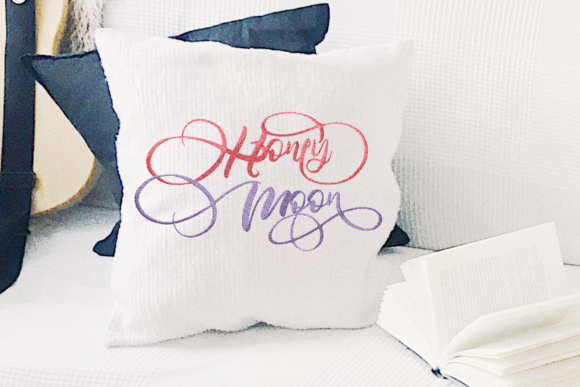
Honeymoon Lettering
Where Honeymoon Lettering Truly Shines
- Baby embroidery: Stitched onto a onesie or keepsake bib with tone-on-tone ivory thread—delicate, dignified, and meaningful for the couple’s new chapter
- Wedding gift: Embroidered on a monogrammed apron or custom tote bag for the bride or groom—practical, personal, and full of heart
- Nursery decor: Paired with minimalist botanical motifs on a framed hoop piece or crib bumper alternative
- Personalized home decor: Applied to linen throw pillows, ceramic coasters (with iron-on transfer variation), or even stitched onto a wooden tray for a rustic-chic wedding favor
- Etsy seller staple: Works beautifully in printable mockups—layer it over neutral backgrounds with soft shadows to highlight its graceful flow and readability at small sizes
Practical Embroidery Notes You’ll Want Before You Hoop
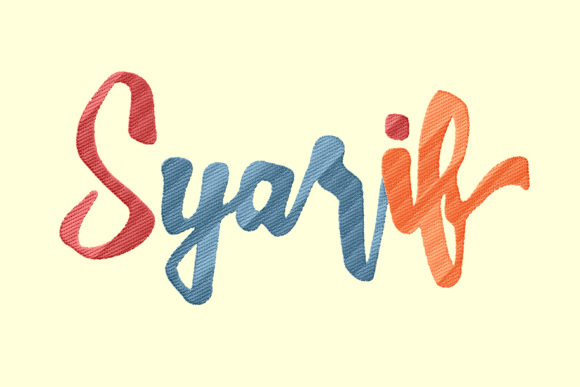
Small lettering demands attention: The lowercase “o” and “e” are delicate, and the connecting strokes between letters rely on consistent tension. On textured towels or thick fleece blankets, I recommend using a medium-weight cutaway stabilizer—not just tear-away—to prevent puckering and keep those fine curves crisp.
For stretchy baby clothes or lightweight cotton voile, add a light layer of wash-away topping to prevent thread sinking and ensure clean edges. And always test stitch-out first—especially if you’re planning to use contrasting thread colors. What reads beautifully on screen may blur slightly when stitched densely on dark fabric. Ivory on charcoal linen? Gorgeous—but only with precise digitization and balanced stitch density.
I also checked hoop size compatibility across my machines. While the design scales well, avoid shrinking it below 3.5 inches wide—the “y” tail and “n” loops begin to lose definition. For commercial embroidery or Etsy shop consistency, confirm your machine’s minimum recommended size before scaling.
Smart Next Steps for Your Small Shop or Craft Practice
- Stitch a test sample on the exact fabric and stabilizer combo you’ll use for client orders—then hold it in natural light and check small details like dot placement and curve smoothness
- Compare thread colors side-by-side on your base fabric—what looks warm on screen may read cool or muddy in real life, especially on ecru or oatmeal tones
- Review licensing and product details on Creative Fabrica—confirm whether the embroidery file permits commercial use for physical goods, digital mockups, or resale as part of a larger collection