Hug, Minimalistic Embroidery Review
First Impression: Friendly, Modern, and Professionally Approachable
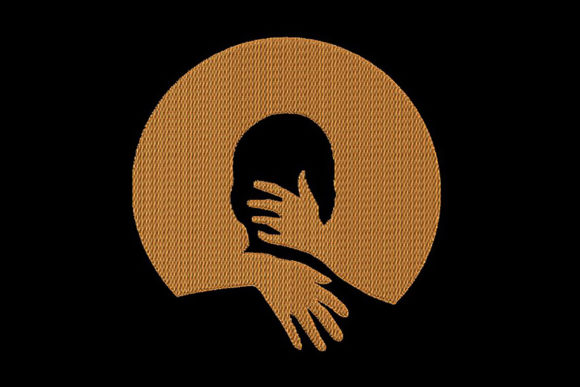
As an embroidery designer who’s developed hundreds of commercial designs for small businesses—from neighborhood bakeries to indie florists—I immediately recognized Hug, Minimalistic as a smart, intentional choice. The title alone signals clarity and warmth: “Hug” evokes connection and care; “Minimalistic” promises clean execution and visual breathing room. This isn’t decorative clutter—it’s brand-aligned storytelling in stitch form. For a café wanting to embroider staff aprons or a pet brand branding tote bags, Hug, Minimalistic lands as friendly without being childish, modern without feeling cold, and handmade without sacrificing polish.
Real-World Business Performance Across Merch Categories
Hug, Minimalistic excels where simplicity meets impact—exactly what small business merch demands. Its one-color construction makes it ideal for embroidered patches applied to jackets, uniforms, or boutique product tags. Because it’s designed for dark fabric with yellow or orange thread, contrast is built-in—no guesswork needed for visibility on black aprons, navy caps, or charcoal tote bags.
For custom apparel, this machine embroidery design shines on chest placements (left or right), sleeve accents, and cap fronts. Its low stitch density means faster production, lower thread consumption, and reduced risk of puckering on lightweight cotton or textured twill—critical for high-turnover items like café staff shirts or event merch. As a branded patch, it holds up beautifully when heat-applied or sewn onto denim jackets or canvas totes, reinforcing brand identity without overwhelming the garment.
Etsy sellers and handmade brands will appreciate how Hug, Minimalistic supports cohesive visual consistency: pair it with a simple monogram or tagline in your shop banner, then use the same design across packaging accents, product labels, and customer thank-you gifts. It reads as premium—not because it’s ornate, but because it’s confident in its restraint.
Where to Use Hug, Minimalistic Thoughtfully
While versatile, this design has boundaries worth honoring. Avoid scaling it down below 2 inches wide on curved surfaces like cap fronts—minimalism can vanish into ambiguity if spacing collapses or outlines blur. On highly textured fabric (e.g., bouclé or heavy linen), test stitch density first: even low-count designs can lose definition if stabilizer isn’t matched to base material.
Because it relies on strong color contrast, resist using pale thread on light fabric unless you’re intentionally softening the message—say, for a baby boutique’s organic cotton onesies. And while Hug, Minimalistic is built for durability, always confirm wash-test results if applied to items requiring frequent laundering (e.g., restaurant aprons or daycare staff uniforms). Dark uniforms are its sweet spot—but verify thread colorfastness before bulk runs.
How Hug, Minimalistic Strengthens Brand Identity and Customer Trust
In merch, less often means more—especially for small businesses competing with corporate polish. Hug, Minimalistic communicates intentionality: it says you value clarity, warmth, and craftsmanship over flash. That builds trust. A florist using it on reusable tote bags signals care for both aesthetics and sustainability. A creative studio applying it to embroidered patches for client gift sets reinforces approachability and attention to detail.
Unlike busy logos that fade into background noise, this design boosts recognition through repetition: same shape, same placement, same thread tone across aprons, caps, and packaging. That consistency strengthens visual memory—customers begin associating the subtle curve of the “Hug” shape with your brand long before they read your name. And because it’s rooted in handmade presentation—not digital perfection—it feels authentic, not algorithmic.
Practical Embroidery Designer Notes for Commercial Use
Before launching Hug, Minimalistic into production, run these checks:
- Test in black and white first—verify outline integrity and spacing without color distraction.
- Confirm it scales cleanly at your target patch size (e.g., 1.75”–2.5”)—zoom in on vector or stitch preview to check for unintended gaps or merged elements.
- Review thread color contrast on actual fabric swatches—not just screen previews. Yellow on black works; lemon on charcoal may not.
- Inspect spacing between elements—minimal doesn’t mean tight. Ensure no stitches crowd edges or compromise legibility on curved seams.
- Confirm hoop size compatibility with your embroidery machines—“one size” in the description suggests flexibility, but always cross-check before digitizing.
- Test on real fabric with proper stabilizer—especially for stretchy knits or loose weaves where minimal stitch count can shift.
- Create a printable mockup for client approval—show it on a cap, tote, and apron to visualize context before stitching begins.
- Compare it beside other design assets—does it harmonize with your logo, typography, and brand palette? Or does it stand apart too sharply?
- Verify commercial licensing—this machine embroidery design is labeled for business use, but always reconfirm terms before mass-producing for resale, Etsy listings, or wholesale partners.
Final Thought: A Strategic Asset, Not Just a Design
Hug, Minimalistic isn’t just another embroidery file—it’s a tactical tool for small business merch. It bridges emotional resonance (“Hug”) with functional intelligence (“Minimalistic”), making it equally effective on a bakery’s staff cap and a craft studio’s limited-edition tote bag design. In Sewing and Embroidery workflows, it saves time, reduces errors, and elevates perceived value—all while staying true to handmade authenticity. For apparel decorators, Etsy sellers, and local brands building recognition one stitch at a time, Hug, Minimalistic delivers more than charm. It delivers clarity, confidence, and quiet professionalism—stitched to last.