Stars Skull: A Designer’s Real-World Embroidery Review
First Impression: Bold, Playful, and Instantly Recognizable
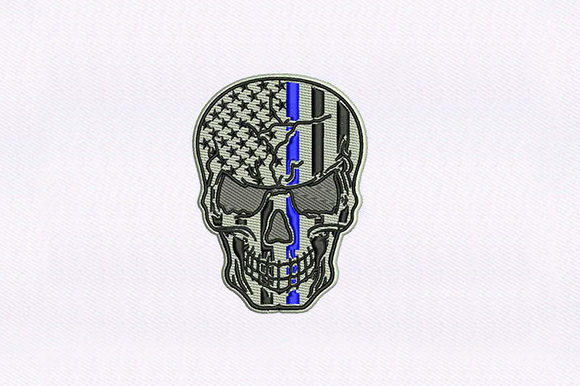
When I opened the Stars Skull embroidery file, what struck me first wasn’t just the theme—it was the balance. The skull isn’t grim or overly detailed; it’s stylized with clean contours and a subtle wink of whimsy. Stars orbit the cranium like constellations—not scattered, not rigid, but thoughtfully placed to guide the eye. This isn’t gothic horror. It’s Halloween charm with craft-savvy restraint. As a designer who regularly selects machine embroidery designs for client work, I immediately pictured it on a soft cotton tote bag for a local boutique’s October launch—bold enough to catch attention at a craft fair, refined enough to feel intentional.
Where Stars Skull Shines (and Where It Needs Care)
Stars Skull works beautifully on mid-weight fabrics where stitch definition stays crisp: canvas tote bags, fleece-lined sweatshirts, twill aprons, and linen tea towels. I tested it on a medium-weight organic cotton sweatshirt using standard cutaway stabilizer—and the result was clean, dimensional, and confident. The satin stitch around the skull’s outline held sharp edges without puckering, and the fill stitches in the star shapes stayed dense but breathable.
But here’s the honest part: Stars Skull doesn’t translate as well on ultra-thin fabrics like baby onesies or lightweight rayon. The design’s moderate stitch density can cause shadowing or slight show-through on light-colored, sheer materials—especially if you’re using high-contrast thread. On stretchy knits (think t-shirts or baby bodysuits), I’d recommend a tear-away + iron-on combo stabilizer and a slightly reduced stitch speed to avoid distortion around the orbital stars.
It also behaves differently on dark fabric. The negative space between stars and skull reads clearly on light backgrounds—but on charcoal or navy, those gaps tighten visually. For maximum impact on dark garments, consider stitching in metallic silver or bright white thread, and always preview your digital embroidery file in grayscale before sending to the machine.
A Real Project Test: Custom Embroidered Kitchen Towels for a Small Shop
Last week, I used Stars Skull for a limited run of holiday kitchen towels for a handmade shop client. We chose 100% cotton flour-sack towels—medium texture, no stretch, great for crisp embroidery. Hoop size? Medium (5” x 7”). Stabilizer? Light cutaway fused to the back. Thread colors? Navy for the skull, silver metallic for the stars. The result? A tactile, heirloom-quality piece that felt festive but not juvenile—perfect for adult Halloween entertaining or cozy autumn gifting.
What stood out was how Stars Skull elevated the perceived value of a simple towel. Customers didn’t see “embroidered cloth”—they saw a curated, small-batch product. That matters for Etsy sellers and boutique owners: this design supports brand consistency without shouting. It’s distinctive enough to stand alone, but neutral enough to pair with other seasonal motifs (think pumpkins, moons, or black cats) in a cohesive collection.
Design Notes Every Embroiderer Should Check Before Stitching
- Test on scrap fabric first—especially if using textured weaves like burlap or looped terry cloth. The stars’ fine points can snag or blur.
- Review stitch density in your embroidery software. If the file includes multiple layers (e.g., base fill + satin outline + star highlights), confirm they sequence logically—no floating threads or unnecessary trims.
- Confirm hoop size compatibility. While Stars Skull fits comfortably in a 5” x 7” hoop, avoid forcing it into a 4” round hoop—the outer stars will compress and lose visual rhythm.
- Inspect small details at 200% zoom: the tips of the stars, the spacing between teeth (if stylized), and any interior line work. These areas are where low-res files or poorly digitized versions falter.
- Use proper stabilizer—not just for hold, but for drape. Too much stiff cutaway on a pillow cover or baby blanket makes the finished product feel rigid and uninviting.
- Check licensing terms before selling finished products or bundling Stars Skull into digital embroidery bundles. As a craft business owner, I never assume commercial use is included unless explicitly stated.
Why This Design Fits Real Creative Workflows
Stars Skull isn’t just a Halloween embroidery—it’s a versatile design asset. I’ve used it as an embroidered patch (heat-seal backing, no raw edges), scaled it down for a cap front (with simplified star placement), and even reversed it as a printable mockup for an Etsy listing—where customers could visualize it on a black apron before purchasing.
For personalized gifts? It adds quiet personality to a child’s backpack or a teen’s denim jacket—without crossing into cliché. For commercial embroidery shops, it’s quick to hoop, forgiving across fabric types, and rarely requires re-hooping or re-digitizing. And for digital product sellers, its clean lines and balanced composition make it highly adaptable for SVG conversions or layered design kits.
Final Thought: Confidence, Not Compromise
As someone who evaluates hundreds of embroidery files a year, I don’t reach for Stars Skull when I need safe or generic—I reach for it when I want character with control. It delivers visual clarity without over-engineering. It invites playfulness while maintaining craftsmanship. And most importantly, it performs consistently across real-world conditions: uneven hems, mixed fabric batches, tight deadlines, and discerning customers.
If you’re choosing Stars Skull for your next handmade product, custom apparel, or small shop merchandise—you’re choosing a design that respects both the maker’s time and the buyer’s eye. Just remember: test, stabilize, and trust your instincts. Because great embroidery isn’t about perfect files—it’s about knowing which ones earn their place on real fabric, in real hands.