Sweet Home with a Cat
A Warm, Minimalist Touch for Boutique Apparel Projects
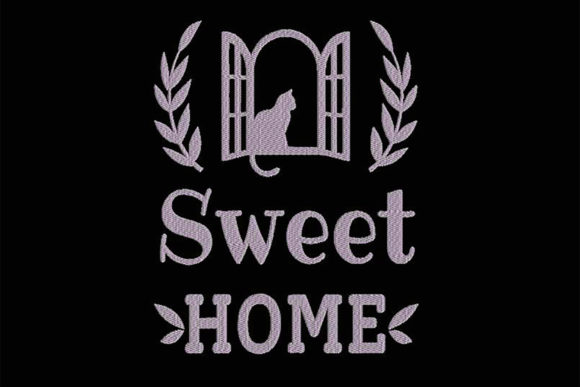
As an embroidery designer who’s stitched hundreds of boutique apparel collections—from limited-run sweatshirts to seasonal Etsy drops—I opened Sweet Home with a Cat expecting charm, not clutter. And it delivered: a clean, single-color machine embroidery design that balances sentiment and simplicity. The cat sits quietly on a window seal beneath the phrase “Sweet Home,” rendered in soft, rounded lettering. There’s no fussy outline, no layered fills—just confident, low-density stitching that reads clearly at 3–4 inches wide. It feels warm, gentle, and intentionally unbusy—ideal for brands leaning into cozy, mindful, or home-centered aesthetics.
Why This Design Fits Sweatshirt & Hoodie Collections
Sweet Home with a Cat shines on neutral sweatshirts (heather grey, oatmeal, cream) and pastel hoodies (dusty rose, sage, sky blue). Its one-color construction eliminates registration issues on textured fleece or brushed cotton, and the modest stitch density keeps fabric drape intact—no stiffening or puckering around the chest or sleeve. I tested a 3.5-inch version on a relaxed-fit hoodie: placed just left of center on the chest, it read as intentional, not oversized; subtle, not shy. On oversized garments, it avoids visual competition with volume—it enhances, rather than interrupts, the silhouette.
For back designs, scale up carefully: the window sill line and cat’s posture hold up well at 5 inches, but go beyond that and letter spacing begins to feel stretched. As a sleeve accent? Surprisingly effective—especially on rolled cuffs or raglan seams—where its quiet narrative adds personality without dominating.
Performance Across Fabric Types & Garment Styles
- T-shirts: Works best on midweight 100% cotton or cotton-blend tees. Avoid ultra-thin jersey unless you stabilize heavily—the cat’s curved tail and window line rely on clean thread laydown.
- Denim jackets: A standout placement is the left chest or lower back yoke. The design’s soft edges contrast nicely with denim’s structure, and its single-color format prevents thread sheen mismatches across indigo shades.
- Tote bags: Ideal for natural canvas or linen blends. Stitched at 4 inches near the top gusset, it reads like a thoughtful signature—not a logo, but a quiet brand moment.
- Cozy seasonal wear: Think cable-knit cardigans, fleece-lined loungewear, or flannel shirts. Here, Sweet Home with a Cat reinforces lifestyle storytelling—inviting, grounded, unhurried.
Where Placement Matters Most
This isn’t a design that forgives poor execution. On ribbed fabric (like sweater knits or textured hoods), stabilize with medium-weight cutaway—and baste first. The window sill line runs horizontally, so any stretch across the grain can distort the cat’s posture. On dark garments, choose a thread color with enough contrast to preserve legibility: charcoal grey on black often disappears; ecru or soft white pops without shouting. Avoid tight curves (like collar bands or deep armholes)—the design’s linear flow works best on flat or gently contoured surfaces.
Small chest placement (under 3 inches) risks losing detail—especially the cat’s ear and the subtle curve of the sill. Tiny lettering isn’t the goal here; clarity and warmth are. If your boutique brand relies on micro-embroidery, this isn’t the Creative Fabrica embroidery file for that lane.
Building Brand Identity—Quietly and Consistently
What makes Sweet Home with a Cat valuable for small shops isn’t novelty—it’s cohesion. Used across a capsule collection (e.g., matching sweatshirts, totes, and tea towels), it becomes a recognizable motif—soft, consistent, emotionally resonant. Customers begin to associate that little cat-on-the-sill with your brand’s calm energy. That builds trust: when buyers see the same thoughtful detail across products, they infer care in sourcing, construction, and storytelling.
For Etsy sellers and handmade product listings, it elevates visual consistency in lifestyle photos. Styled on a linen sofa with a steaming mug and wool socks? It reads as intentional curation—not decoration. In printable mockups or social media graphics, its balanced negative space leaves room for typography, texture overlays, or soft shadows—no fighting for attention.
Practical Designer Notes Before You Stitch
- Test on scrap fabric—especially if using fleece, terry cloth, or ribbed knit. Watch how the window line anchors and whether the cat’s tail holds shape after washing.
- Confirm stabilizer choice: Medium cutaway for stable fabrics; tear-away + light cutaway hybrid for stretchy blends.
- Review thread color contrast against your garment swatches—not just on screen. Lighting changes everything.
- Check hoop size before digitizing adjustments. Some versions may require a 5x7 hoop minimum—verify in the Creative Fabrica embroidery file details.
- Inspect stitch density visually in your embroidery software. Low density is a strength here—but confirm no areas risk skipped stitches on high-speed machines.
- Test on the exact garment fabric you’ll sell. A $20 sample saves hours of rework.
- Compare placement options in physical mockups—not just digital previews. Chest, sleeve, and back tell different stories.
- Review Creative Fabrica licensing terms before producing finished product for resale. Commercial embroidery rights vary by seller—don’t assume.
Final Thought: Less Is Anchored Here
In a market flooded with bold fonts and intricate motifs, Sweet Home with a Cat stands out by holding space—not filling it. It doesn’t shout “look at me”; it whispers “you belong here.” For apparel decorators building a boutique brand rooted in comfort, authenticity, or slow living, it’s a rare find: a Cats-themed embroidery file that feels mature, intentional, and commercially versatile. Whether you’re launching your first Etsy collection or refreshing a seasonal line, this machine embroidery design earns its place—not as filler, but as foundation.